

Existing Infrastructure Reused to Drive Down Construction Cost: Market Center - San Francisco, CA
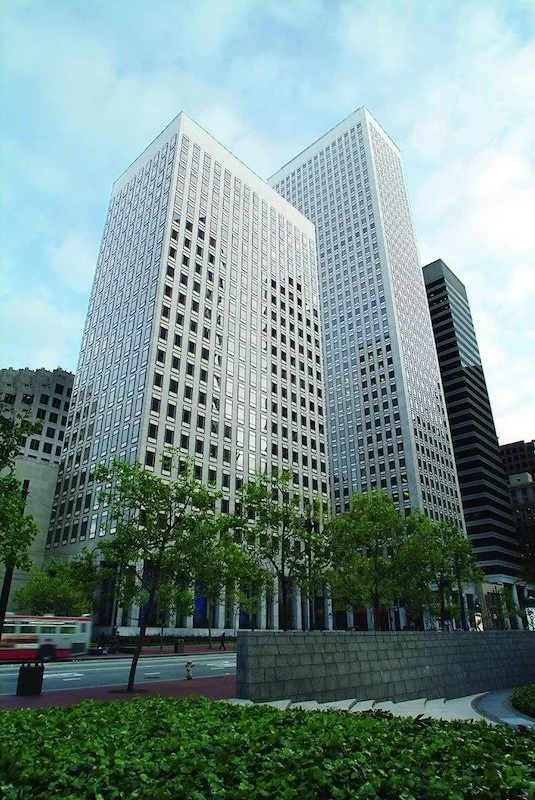
At a Glance
A spec suite tenant improvement on the 40th, 38th and 35th floor of a high-rise office tower required reconfiguring HVAC zoning around existing main ductwork and hot water piping. Keeping those systems in place reduced construction exposure and avoided the disruption and cost of full main replacements in an occupied building.
Project Specifications
Category: Commercial
Location: 575 Market Street, San Francisco, CA
Overall Area: 30,085 ft²
Services Provided: HVAC Design and Engineering
Completion Date: 2026
Contractor: Matrix HG
Project Description
Lead
Market Center's 40th, 38th, 35th floor spec suite presented a common high-rise TI condition with an uncommon constraint: retain the existing supply air mains and hot water heating mains rather than replace them, requiring the new HVAC layout to work around existing infrastructure. Pragmatic PE translated existing PDF as-builts into working Revit drawings before any design could begin, establishing a reliable baseline for the terminal unit layout and distribution extensions. Coordinating the new VAV zoning plan against inherited ductwork and piping conditions was the central risk the project had to resolve before reaching permit.
Scope of Work
Pragmatic PE provided mechanical/HVAC engineering and design services for the Suite 4000,3800 and 3500 spec suite tenant improvement at 575 Market Street.
Mechanical/HVAC
• Translated existing mechanical as-built PDFs into Revit to establish a verified field condition baseline before design proceeded
• Developed HVAC peak load calculations and VAV zoning plans with thermostat and CO2 sensor locations to match the new tenant layout
Existing Systems Integration
• Coordinated new terminal unit locations and low-pressure distribution extensions to connect into retained supply air mains, avoiding full duct replacement
• Defined demolition scope to clearly separate what was to be removed from what was to remain, reducing field ambiguity for the mechanical contractor
Permit and Construction Documentation
• Generated phased design documents at 50%, 75%, and 90% milestones with coordination against architectural and electrical reflected ceiling plans
• Prepared City of San Francisco permit documentation including prescriptive Title 24 mechanical forms and GS4 forms
Challenges and Solutions
Constraint: Existing supply air mains and hot water heating mains lacked current, usable documentation, making it difficult to design extensions without field verification of actual conditions.
Response: Pragmatic PE converted the available as-built PDFs and markups into Revit drawings, creating a working baseline that allowed the new VAV layout to be designed around confirmed existing conditions rather than assumed ones.
Constraint: The decision to retain existing mains rather than replace them required the new distribution layout to fit within what the existing infrastructure could support without full system analysis of the house system capacity.
Response: The design was developed to extend and connect into the existing mains within the known TI footprint, with alternate bid items scoped for demo and replacement of supply and hot water mains if field conditions required it.
Constraint: City of San Francisco permit submissions carry specific documentation requirements, including GS4 forms, that add process steps beyond standard municipal filings.
Response: Permit-ready Title 24 prescriptive mechanical forms and GS4 documentation were prepared as part of the 90% deliverable package to support a complete first submission.
Results and Impact
• Construction cost was reduced by retaining existing supply air mains and hot water heating mains, eliminating the labor and material associated with full main replacements in an occupied high-rise
• Field ambiguity was reduced by producing a verified Revit baseline from as-built PDFs before design began, giving the mechanical contractor a reliable reference for work.
• Alternate bid items for main replacement were scoped and documented separately, preserving the owner's option to upgrade if field conditions did not support reuse without delaying the base permit package
• A structured three-milestone drawing schedule with defined architectural background freeze dates kept the permit timeline predictable and reduced the risk of late-cycle redesign.