

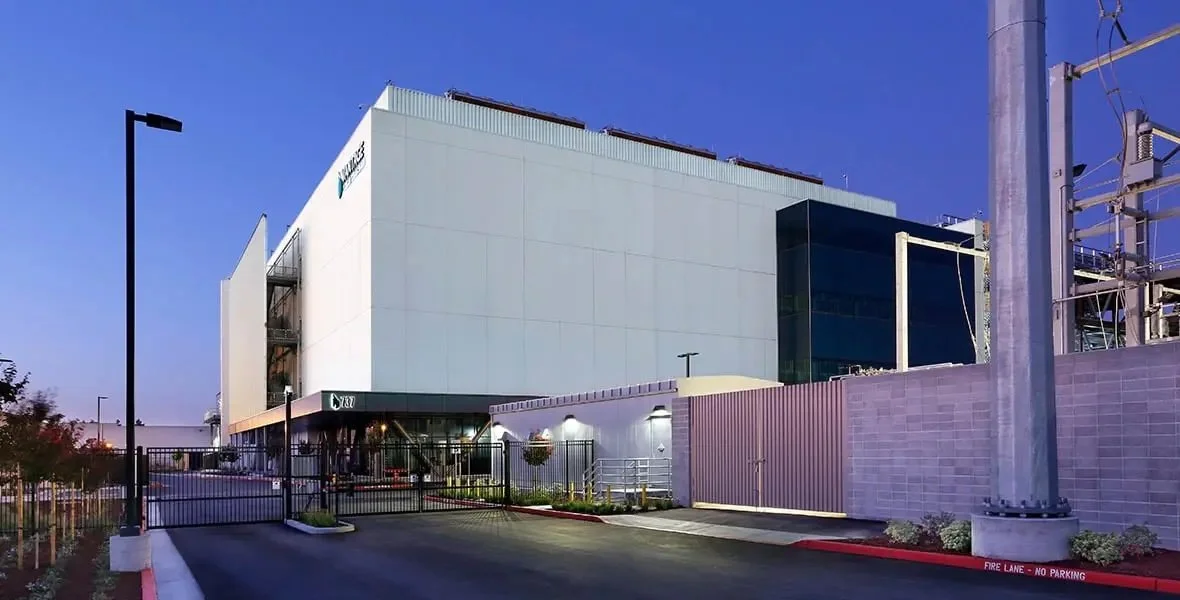
At a Glance
For Vantage Santa Clara II Data Center Campus, Pragmatic PE developed permit-ready engineering for a UPS/battery room integrating N+1 cooling, LEL-based ventilation, hydrogen detection, and coordinated fire alarm and fire sprinkler systems. The design addressed concentrated heat loads, battery off-gassing, and existing chilled-water infrastructure to produce a safe, maintainable room cleared for city permit review.
Project Specifications
Category: Data Centers
Services Provided: Mechanical Engineering, Fire Alarm, and Fire Protection
Completion Date: 2026
Owner: Vantage Data Centers
Contractor: MORE Consulting
Project Description
Lead
Pragmatic PE developed permit documents for a UPS/battery room at Vantage Santa Clara II Data Center Campus, served by existing chilled-water infrastructure. UPS and battery rooms are recurring high-risk spaces in data center work: concentrated heat loads, battery off-gassing, detection interfaces, emergency ventilation, and suppression requirements all require resolution before the room can safely support critical power equipment. The design focused on safe operation, maintainable equipment placement, and clear interfaces between cooling, ventilation, hydrogen detection, fire alarm, and fire sprinkler systems.
Scope of Work
Pragmatic PE provided mechanical/HVAC, schematic fire alarm, and fire protection engineering services for this project.
Mechanical / HVAC
• Developed cooling load calculations from UPS heat dissipation data, lighting, occupancy, ventilation, and applicable safety factors.
• Established a cooling-only chilled-water air handling approach with N+1 redundancy, coordinating with the existing system using as-built water temperature data.
• Determined ventilation and exhaust airflow for the UPS room based on LEL calculations and applicable fire code.
UPS / Battery Room Safety
• Integrated supply and exhaust fans with gas-sensor control to maintain room gas concentrations below hazardous levels, with hydrogen detection specified to address battery off-gassing.
• Coordinated hydrogen detection with ventilation controls, BAS, and fire alarm interfaces.
Fire Alarm and Fire Protection
• Prepared schematic fire alarm permit drawings covering device layout, wiring schedules, operation matrix, and riser diagram.
• Prepared fire sprinkler permit drawings covering pipe routing, hanger and seismic bracing, head layout, and hydraulic calculations.
• Coordinated fire alarm and fire protection so ventilation, detection, and suppression interfaces were documented consistently across disciplines.
Challenges and Solutions
Constraint: Battery off-gassing in UPS rooms creates potentially hazardous gas conditions that standard comfort-cooling ventilation does not address.
Response: Ventilation and exhaust airflow was determined from LEL calculations, gas-sensor control was integrated, and hydrogen detection was coordinated with BAS and fire alarm interfaces.
Constraint: Concentrated UPS equipment heat created a reliability risk, not a comfort-cooling problem.
Response: Cooling loads were developed from UPS heat dissipation data and translated into a cooling-only chilled-water AHU configuration with N+1 redundancy.
Constraint: Battery room safety depended on multiple systems acting together: ventilation, controls, fire alarm, and fire sprinkler.
Response: Permit documents coordinated mechanical ventilation, hydrogen detection, fire alarm operation, sprinkler routing, equipment locations, and contractor handoff expectations into one consistent set of deliverables.
Results and Impact
• Delivered permit-ready documents with cooling, ventilation, detection, fire alarm, and fire sprinkler coordinated into one package, reducing plan-check gaps.
• LEL-based ventilation and hydrogen detection addressed gas accumulation risk and gave the owner a defined path for alarm and controls integration.
• N+1 cooling addressed the reliability dimension of UPS room thermal control, supporting critical-power continuity.
• Fire alarm and sprinkler documentation clarified equipment layout, interface expectations, pipe routing, and plan-check deliverables.