Existing Infrastructure Capacity Defined Before Construction Begins: Google MTV-RLS1 - Mountain View, CA
At a Glance
A capacity analysis of existing MEP infrastructure determined how many AES environmental chambers the facility could absorb without triggering system upgrades, protecting the owner from mid-project redesign risk. Documented load calculations and phased drawing publications gave Google stakeholders structured review gates before construction commitments were made.
Project Specifications
Category: Laboratories
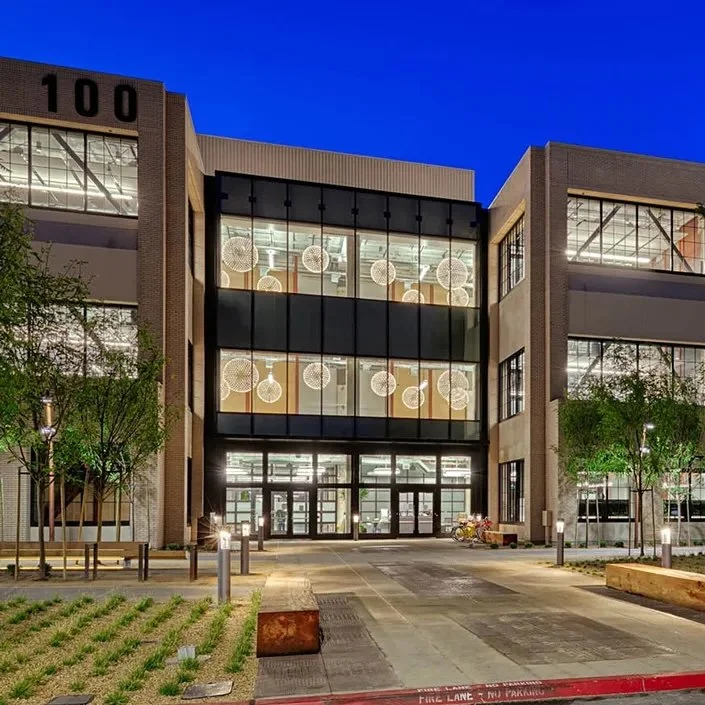
Location: 100 Mayfield Ave, Mountain View, CA
Services Provided: Mechanical, Electrical, Plumbing & Process Piping, Construction Administration
Completion Date: 2024
Owner: Google
Contractor: COBE Construction
Project Description
Lead
Google's MTV-RLS1 facility at 100 Mayfield Avenue required MEP engineering to support the addition of AES environmental test chambers within an occupied, operational campus building. The central question before any design could proceed was whether existing chilled water, process cooling water, compressed dry air, and electrical distribution could absorb additional chamber loads without infrastructure replacement. Pragmatic PE structured the engagement to resolve that capacity question first, protecting Google from scope creep and budget exposure before permit drawings were issued.
Scope of Work
Pragmatic PE provided mechanical, plumbing/process piping, and electrical engineering services for the AES chamber addition at 100 Mayfield Avenue.
Mechanical/HVAC
• Evaluated existing CHW and PCW distribution infrastructure to define available spare capacity supporting new chamber connections without system modification
• Developed mechanical floor plans and updated CHW/PCW flow diagrams to document chamber tie-in points and system configuration
Electrical
• Developed a power plan, panel schedules, and a single-line diagram for the new AES chambers, confirming available panel capacity before new branch circuits were designed
• Coordinated electrical scope with Google's project requirements documentation to align drawing deliverables with owner review and sign-off workflows
Plumbing/Process Piping
• Developed process piping plans and updated CDA flow diagrams to document compressed dry air connection points for new chamber support
• Produced underground drainage plans for AES chamber waste, coordinating below-slab routing with above-ground process piping to avoid sequencing conflicts during construction
Construction Administration
• Supported construction through RFI response and submittal review, with OAC meeting attendance structured to maintain schedule alignment through installation
Challenges and Solutions
Constraint: Existing MEP infrastructure condition and spare capacity were unknown at project outset, creating risk that design would proceed on incorrect assumptions
Response: Pragmatic PE conducted a pre-design capacity review of mechanical, plumbing, process piping, and electrical systems, issuing load calculations to Google stakeholders for sign-off before permit drawings were generated
Constraint: A compressed forty-working-day design schedule, structured in four sequential publication milestones, required clear scope boundaries to prevent rework from stakeholder feedback arriving late in the process
Response: The engagement was structured with defined submission gates at 50% and 100% for both design and construction drawing sets, with a single allocated design revision window to absorb Google stakeholder comments without schedule disruption
Constraint: The phased chamber installation created a two-part scope, with an initial group of chambers to be permitted and constructed while a larger future phase remained undefined
Response: A schematic design alternate was scoped separately for the remaining chambers, allowing Google to obtain ROM pricing for Phase 2 without delaying Phase 1 permit submittal
Results and Impact
• Existing infrastructure was confirmed as adequate to support the initial chamber addition without system upgrades, removing a significant budget uncertainty before construction began.
• Structured capacity calculations issued for Google stakeholder sign-off created a documented decision record that protected both the owner and the design team from configuration change disputes during construction.
• Phased drawing publications with defined review windows reduced turnaround risk on a compressed schedule by preventing late-cycle stakeholder comments from reopening completed design work.
• A separately scoped Phase 2 schematic alternate gave Google a clear path to expand chamber count without requiring a full re-engagement or scope renegotiation.