

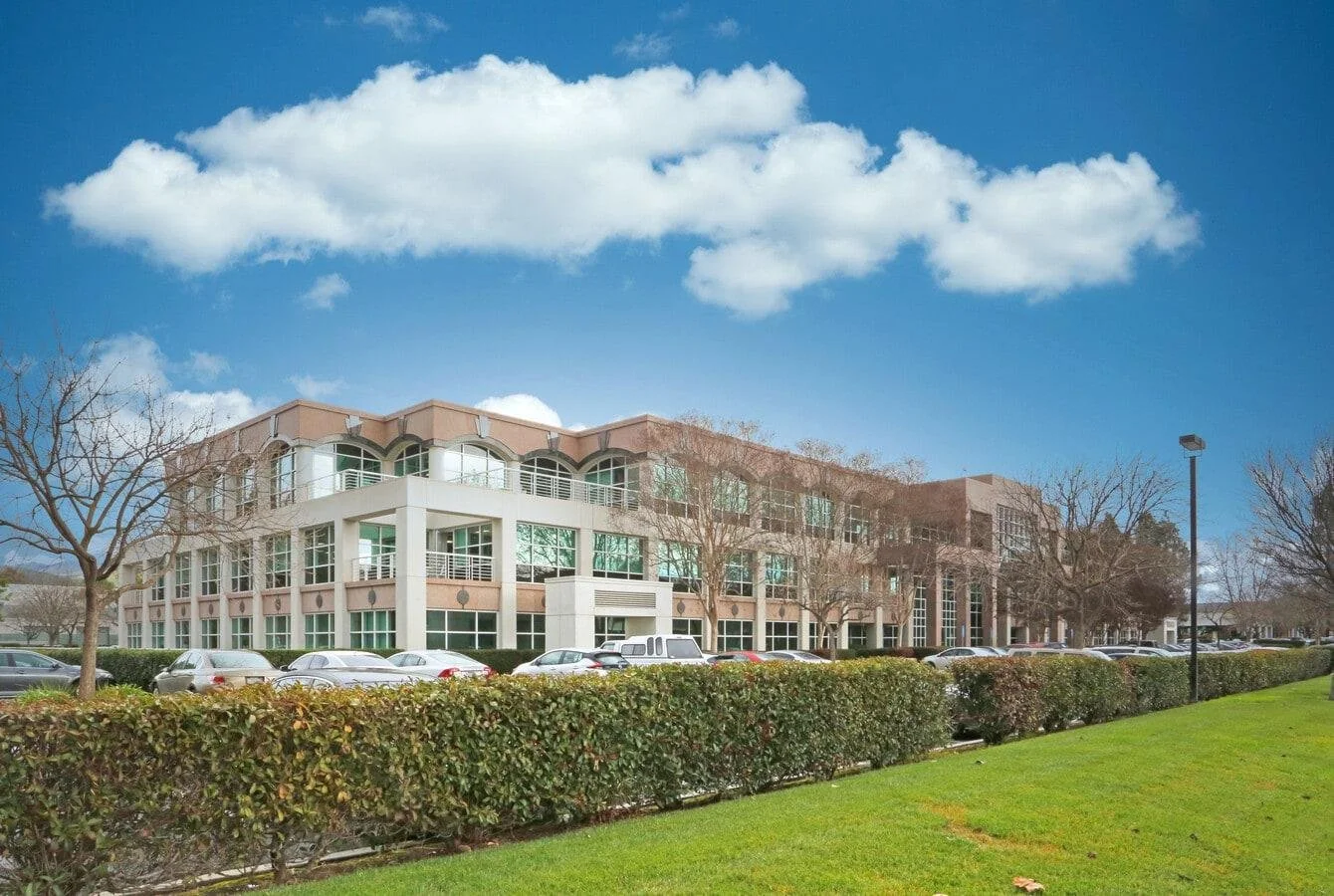
At a Glance
An existing commercial building received a full HVAC retrofit delivered across three construction phases, requiring mechanical, electrical, and structural work to be sequenced without disrupting active building operations. Phased permit drawings and coordinated sequences of operation gave the contractor a clear path through each stage while protecting against scope creep into future phases.
Project Specifications
Category: Commercial
Overall Area: 16,718 ft²
Services Provided: Mechanical and Electrical Engineering
Completion Date: 2026
Owner: Swift Real Estate Partners
Project Description
Lead
This multi-story commercial building in San Jose required a ground-up HVAC retrofit touching basement equipment, floor-level air handlers, and rooftop cooling tower infrastructure, all within an occupied facility with layered phasing constraints. Pragmatic PE evaluated multiple layout and sequencing alternatives to identify the most constructable path before committing to permit documents, reducing the risk of mid-construction redesign. Coordinated mechanical, electrical, and structural permit sets documented each phase independently so the contractor could mobilize and progress without waiting on downstream scope resolution.
Scope of Work
Pragmatic PE provided mechanical and electrical engineering services for this phased HVAC retrofit project, with structural engineering coordinated through a subconsultant.
Mechanical / HVAC
• Developed mechanical permit drawings across three distinct construction phases, allowing the contractor to sequence equipment installation without full-building shutdowns
• Developed Carrier HAP energy models comparing three HVAC system replacement alternatives, their energy use, and their cost
• Documented sequences of operation and coordinated directly with the controls contractor to align phased control logic with each installation stage
Electrical
• Generated phased power plans for HVAC equipment with a single line diagram that explicitly mapped future phase work, protecting against panel conflicts as the project progressed
• Produced panel schedules and load calculations covering both present and future scopes, so electrical infrastructure decisions made in early phases did not foreclose later capacity
Structural
• Coordinated subconsultant delivery of mounting and support details for basement equipment, chilled water piping, and floor-level air handlers, aligning with mechanical drawings to resolve clearance and load path conflicts before permit submission
• Managed subconsultant development of seismic calculations and pan deck securing details at the cooling tower perimeter, addressing a structural interface that is frequently left unresolved until field conditions force a change order
Challenges and Solutions
Constraint: Existing basement conditions were unknown prior to design, creating routing and mounting uncertainty across all three disciplines.
Response: Pragmatic PE conducted dedicated site investigations in the basement and on each floor to field-verify conditions before drawings were issued, eliminating assumption-driven conflicts at permit.
Constraint: Three-phase construction required electrical infrastructure decisions in Phase 1 to remain compatible with equipment not yet purchased or installed in later phases.
Response: Load calculations and the single line diagram were structured to cover present and future scopes together, so early electrical work did not need to be reworked as subsequent phases activated.
Constraint: Rooftop cooling tower work introduced a structural interface with the existing roof deck that lacked documented existing conditions.
Response: As-built drawings were reviewed and site conditions field-verified before the subconsultant developed pan deck securing details, grounding the structural solution in confirmed conditions rather than assumptions.
Results and Impact
• Contractor received phase-specific permit drawings that allowed mobilization on each construction stage independently, avoiding full-project holds during plan check.
• Phased single line diagram and load calculations preserved future electrical capacity without requiring panel modifications when later phases activate.
• Direct coordination between mechanical sequences of operation and the controls contractor reduced the risk of controls rework after equipment installation.
• Structural details for basement equipment, piping, and air handler mounting were resolved before permit submission, removing a common source of field-generated RFIs during mechanical rough-in.